 Skip to content
Your roof is most likely leaking due to damaged or missing shingles, failed flashing around chimneys or vents, clogged gutters, or worn-out sealants, all of which are extremely common in New Jersey homes due to the state’s harsh winters, heavy rain, and extreme temperature swings.
If you’re staring at a water stain on your ceiling or chasing drips with a bucket, you’re not alone. Roof leaks are one of the most common and most stressful homeowner problems in New Jersey.
The good news? Most leaks have a clear cause, and once you know what you’re dealing with, you can get it fixed fast.
In this guide, we break down the 10 most common reasons roofs leak in NJ, what warning signs to watch for, and when to call a professional before a small drip turns into a major repair bill.
Quick Navigation
• Damaged or Missing Shingles
• Failed Roof Flashing
• Clogged or Damaged Gutters
• Ice Dams (A Major NJ Winter Problem)
• Cracked or Deteriorated Skylights
• Chimney Leaks
• Improper Roof Ventilation
• Flat Roof Ponding Water
• Old or Failing Roof Sealants
• Poor Original Installation
1. Damaged or Missing Shingles
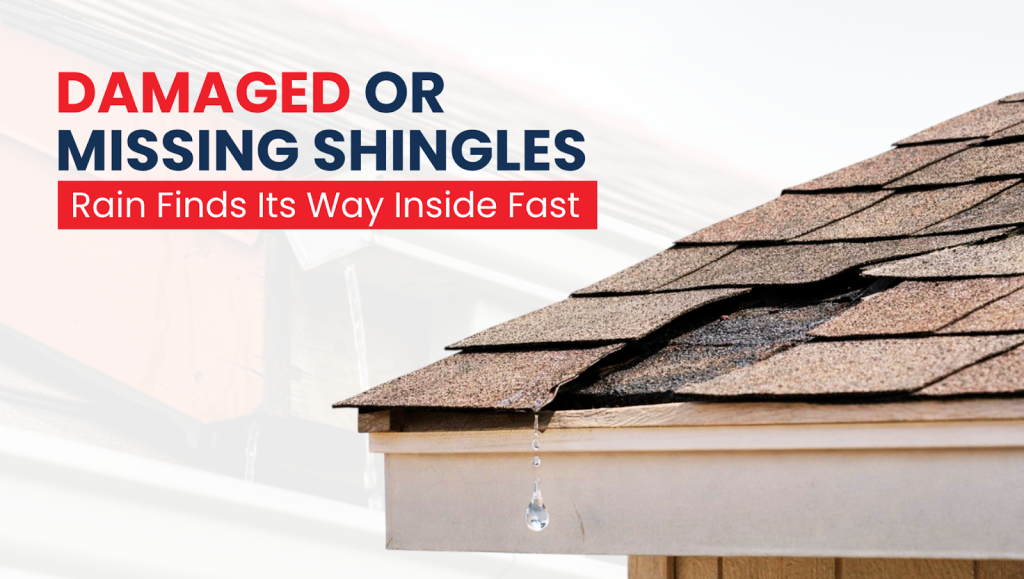
This is the single most common reason roofs leak ,and it’s usually the first thing a roofer checks. Shingles act as your roof’s outer armor. When they crack, curl, blister, or go missing entirely, rainwater has a direct path into your home’s underlayment and decking.
Why does Roof Leaking happen in NJ?
• Freeze-thaw cycles cause shingles to contract and expand repeatedly
• High winds from nor’easters can lift or rip shingles off
• UV exposure over time dries out and cracks asphalt shingles
• Hail damage creates tiny cracks that worsen over time
Signs to watch for:
• Granules in your gutters or downspouts (means shingles are wearing down)
• Visible patches on your roof where shingles are darker or missing
• Curling edges on shingles when viewed from the ground
💡 Pro Tip: You don’t always need to replace the whole roof. If damage is isolated to a section, a targeted repair can fix the leak at a fraction of the cost. See our full guide on roof leak repair in NJ to understand your options.
2. Failed Roof Flashing
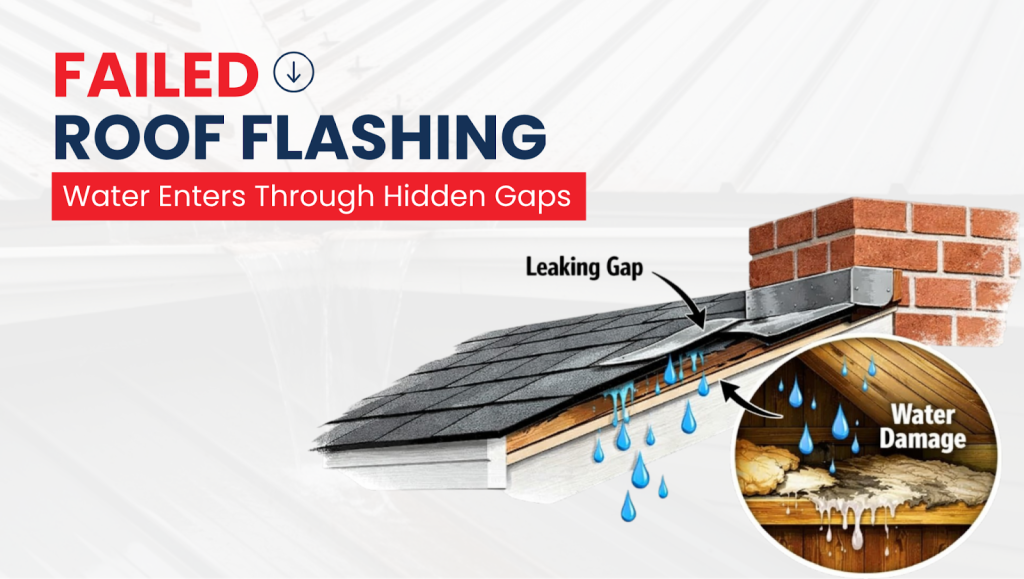
Flashing is the thin metal (usually aluminum or galvanized steel) that seals the joints and transitions on your roof ,around chimneys, skylights, vents, valleys, and where the roof meets a wall. When flashing pulls away, rusts, or was improperly installed, it creates gaps where water pours directly in.
This is one of the trickiest leaks to diagnose because the entry point is often far from where the water shows up inside your home. Water can travel several feet along rafters before dripping onto your ceiling.
Common flashing failure points in NJ homes:
• Chimney flashing (step flashing and counter flashing both need to be intact)
• Pipe boot flashing around plumbing vents
• Valley flashing where two roof planes meet
• Wall-to-roof transitions on dormers or additions
🔗 Related Page: We cover this in detail on our Roof Flashing Repair NJ page ,including what to expect from a flashing inspection and how much it typically costs to fix.
3. Clogged or Damaged Gutters
Your gutters aren’t just for aesthetics ,they’re a critical part of your roof’s drainage system. When gutters are clogged with leaves, debris, or even bird nests, water backs up under your shingles and into your fascia boards.
How this causes leaks:
• Standing water in gutters seeps under the first course of shingles
• Overflowing water saturates the fascia and soffit, causing rot and interior leaks
• Heavy gutters pull away from the roofline, creating gaps
NJ homeowners with lots of mature trees nearby should clean their gutters at minimum twice a year ,once in the fall after leaves drop, and once in the spring. If you’ve had a severe storm, check them immediately after.
4. Ice Dams ,A Major NJ Winter Problem
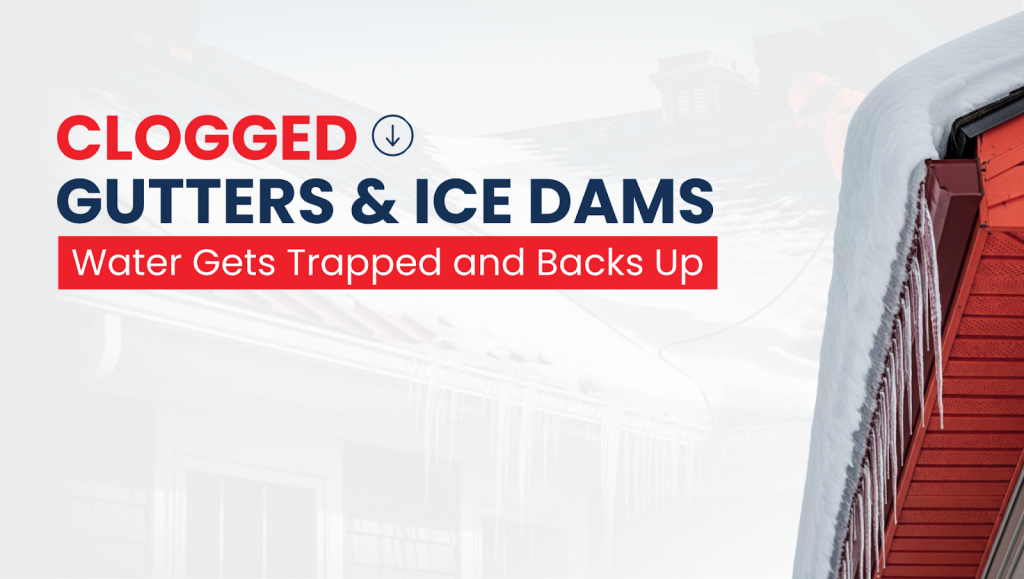
Ice dams are one of the most destructive and misunderstood roof leak causes in New Jersey. They form when heat escaping from your living space warms the roof deck, melting snow near the ridge. That meltwater runs down the roof and refreezes at the colder eaves, forming a wall of ice.
As more meltwater accumulates behind the ice dam, it has nowhere to go ,so it backs up under your shingles and into your home. This can cause extensive damage to insulation, drywall, and even structural wood.
You’re at higher risk for ice dams if:
• Your attic is poorly insulated or ventilated
• You have a low-pitched roof
• You’ve noticed uneven snow melting on your roof after a storm
🔗 Learn More: Ice dam damage can be severe and fast-moving. Visit our Ice Dam Repair NJ page to understand how these form, how we remove them safely, and how to prevent them next winter.
5. Cracked or Deteriorated Skylights
Skylights are a beautiful feature ,until they start leaking. They’re essentially holes in your roof, and the seal between the skylight frame and the surrounding roofing material is a constant weak point, especially as materials age and shift.
Common skylight leak causes:
• Dried-out or cracked rubber gaskets around the skylight frame
• Flashing failure at the curb or apron
• Cracked skylight glazing from impact or thermal stress
• Condensation dripping down from an improperly insulated skylight shaft
Before assuming your skylight is leaking, rule out condensation ,which can look like a leak but is actually moisture forming on a cold surface. A true skylight leak will be worse during or immediately after rain.
6. Chimney Leaks
Chimney leaks are surprisingly common in NJ homes, and they’re often more complex than they appear. Water can enter around a chimney through several different pathways simultaneously.
The main entry points:
• Step flashing: The L-shaped metal pieces that seal where the chimney meets the roof slope
• Counter flashing: Embedded in the mortar joints; cracks with age and freeze-thaw cycles
• Chimney cap: A missing or cracked cap lets water fall straight down the flue
• Crown: The mortar cap on top of the chimney; cracks allow water to seep into the brick
• Spalling brick: Porous, deteriorated brick absorbs water and leaks from the sides
A chimney leak might show up as water stains on the ceiling near the fireplace, or on walls adjacent to the chimney. In some cases, you’ll smell musty odors before you ever see visible damage.
🔗 Related Page: For a full breakdown of what causes chimney leaks and what the repair process looks like, see our Chimney Leak Repair NJ page.
7. Improper Roof Ventilation
Most homeowners don’t think about roof ventilation until something goes wrong ,but poor ventilation is a slow, silent cause of both leaks and structural damage. Without proper airflow in your attic, heat and moisture build up, which:
• Causes condensation on the underside of the roof deck
• Leads to mold and wood rot in rafters and sheathing
• Accelerates shingle deterioration from below
• Contributes to ice dam formation in winter (see Cause 4)
This type of leak is tricky because the damage happens slowly and may not look like a “leak” in the traditional sense. You might notice peeling paint, mold on attic insulation, or a musty smell without an obvious drip.
8. Flat Roof Ponding Water
Flat roofs are common on NJ commercial buildings, additions, and some residential homes. Unlike sloped roofs, flat roofs are designed with a slight pitch to drain water ,but they’re far more vulnerable to ponding (standing water) when that drainage fails.
Why ponding water is dangerous:
• Standing water accelerates membrane deterioration
• Adds excessive weight load to the roof structure
• Finds and exploits every tiny crack or seam in the membrane
• Leads to catastrophic failure if left unaddressed
Flat roofs typically use rubber (EPDM), TPO, or modified bitumen membranes that have a lifespan of 15–25 years. If your flat roof is aging or you’re seeing bubbling, cracking, or pooling water, it’s time for a professional inspection. See our dedicated Flat Roof Leak Repair NJ page for more.
9. Old or Failing Roof Sealants
Sealants and caulking are used around vent pipes, skylights, chimneys, and other penetrations. They’re the last line of defense at these critical points ,and they don’t last forever. Most roofing caulk lasts 5–10 years before it begins to dry out, shrink, or peel away.
When sealant fails, you’ll typically see:
• Water stains around vents or skylights on your ceiling
• Visible cracking or gaps in the caulk around roof penetrations
• Leaks that appear after heavy rain but stop quickly
This is one of the most straightforward fixes in roofing,but only if it’s caught early. Ignoring dried-out sealant leads to water infiltrating your decking and sheathing, turning a $200 fix into a $2,000 problem.
10. Poor Original Installation
Not every roofer does quality work, and unfortunately, a bad installation can haunt a homeowner for years. Issues from poor installation often don’t show up immediately; they emerge after the first hard winter or heavy rain season.
Red flags of a bad installation include:
• Improper shingle overlap or nailing patterns.
• Missing or incorrectly applied underlayment.
• Flashing that was sealed with caulk instead of being properly set.
• Inadequate ventilation built into the system.
• Wrong roofing materials for the roof pitch.
If your roof is relatively new and already leaking, poor installation should be near the top of your suspect list. Document everything with photos and check whether the original contractor is still reachable and offers a workmanship warranty.
How Much Does It Cost to Fix a Roof Leak in NJ?
Repair costs vary widely depending on the cause and extent of the damage. A quick sealant repair might run $150–$300, while replacing damaged flashing around a chimney could be $500–$1,500. More extensive water damage to decking or underlayment can push costs significantly higher.
For a detailed breakdown by repair type, check out our full guide: How Much Does Roof Leak Repair Cost in NJ?
Is Your Roof Leaking Right Now? Don’t Wait.
A small drip can become a structural nightmare in 24–48 hours if water is reaching your insulation, drywall, or framing. If you’re dealing with an active leak, here’s what to do immediately:
• Place buckets to catch dripping water and protect your floors.
• Move valuables and electronics away from the affected area.
• Do not go on the roof yourself ,wet roofs are dangerous and you could make the damage worse.
• Take photos and video of all visible damage for insurance purposes.
• Call a licensed NJ roofer for emergency assessment.
🚨 Emergency Leak? We provide emergency roof leak repair across New Jersey , including Bergen, Essex, Passaic, Hudson, Morris counties, and Toms River. Visit our Emergency Roof Leak Repair NJ page to learn more about our rapid response service.
Final Word: Don’t Ignore a Roof Leak
Every single cause on this list gets worse with time, not better. Roofs don’t “heal” on their own, and water is relentlessly patient. Whether it’s a cracked shingle, failed flashing, or a missing chimney cap, addressing the problem early almost always costs significantly less than waiting.
If you’re in New Jersey and you’re dealing with a leak or just noticing the early warning signs, get a professional inspection before the next storm hits. The cost of a roof inspection is almost always worth it compared to the cost of the damage left behind.
Content provided by NJ Roof Leak Experts
