 Skip to content
Roof leak repair is covered by homeowners’ insurance in NJ, but only if the leak was caused by a sudden, accidental event like a storm, falling tree, or hail. Leaks from normal wear and tear, neglected maintenance, or gradual deterioration are almost always excluded from coverage.
That’s the short answer, but if you’ve ever tried to file a roof claim, you already know it’s never quite that simple. Insurance companies in New Jersey scrutinize every roof claim, and the difference between a covered repair and a denied claim often comes down to how the damage is described, documented, and reported, something experienced roof leak experts deal with every day.
This guide walks you through exactly what’s covered, what isn’t, how to file a successful claim, and what red flags to watch for when dealing with your insurer after a roof leak.
What’s in This Guide
• What homeowners’ insurance actually covers for roof leaks.
• What’s NOT covered (and why claims get denied).
• The covered vs. not covered quick-reference table.
• How to file a roof leak insurance claim in NJ , step by step.
• What happens if your claim is denied.
• Does your roof’s age affect coverage?
• Actual Cash Value vs. Replacement Cost Value , what’s the difference?
• Tips for documenting damage and working with your adjuster.
• When to call a roofer before calling insurance.
What Does Homeowners Insurance Cover for Roof Leaks?
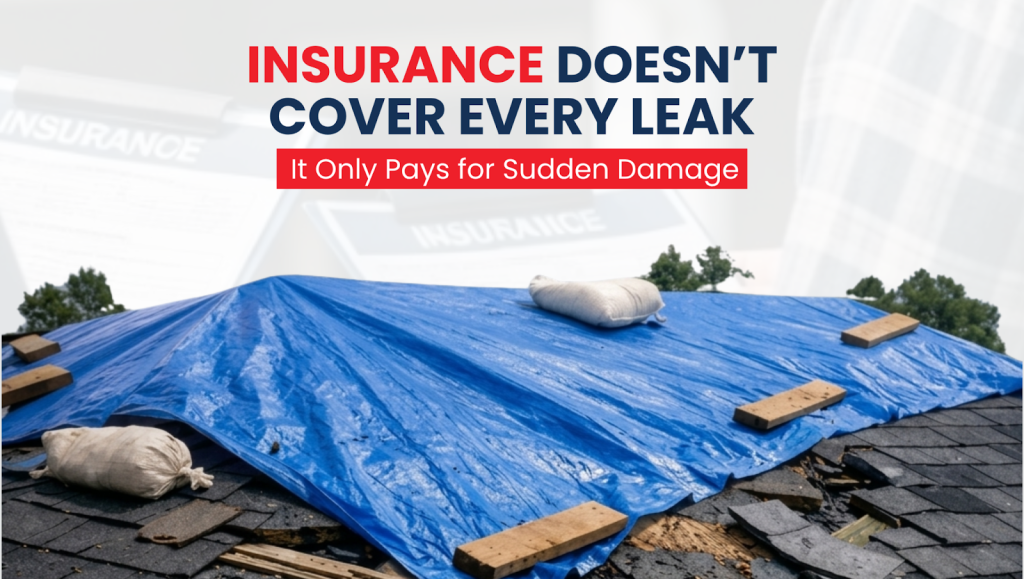
Standard homeowners insurance policies in NJ, typically HO-3 policies, cover roof damage and resulting leaks under what’s called “dwelling coverage” (Coverage A). But the coverage is conditional: the damage must be caused by a covered peril.
Covered perils that typically include roof leaks:
• Wind and hailstorms: One of the most common roof claims in NJ. If a nor’easter or hailstorm damages your shingles and a leak follows, that’s generally covered.
• Falling objects: A tree limb comes down on your roof during a storm and punches through the decking.
• Lightning strike: Direct lightning damage to a roof is covered under virtually all standard policies.
• Fire: Roof damage from fire, including the firefighting effort, is covered.
• Vandalism: If someone deliberately damages your roof, that’s a covered peril.
• Weight of ice, snow, or sleet: Ice dam damage and collapse from snow load can be covered, though insurers sometimes push back on ice dams specifically (more on that below).
💡 Key Takeaway: Coverage is about the CAUSE, not the leak itself. Your insurer isn’t paying to fix your old, worn-out roof ,they’re paying for damage caused by a specific event. Document the event as clearly as possible. So document everything clearly, just as professionals emphasize when providing Roofing Services in Temecula.
What’s NOT Covered, And Why Claims Get Denied?
This is where most NJ homeowners get frustrated. Insurance adjusters are trained to look for evidence of pre-existing conditions and maintenance failures. If they can point to wear and tear, neglect, or age as the underlying cause, they’ll deny or reduce your claim.
Common reasons roof leak claims are denied in NJ:
• Normal wear and tear: Shingles that deteriorate over 20 years, sealants that dry out, flashing that rusts , these are considered maintenance issues, not insured events.
• Failure to maintain: If an adjuster finds your gutters were clogged, causing water to back up under the shingles, they may deny the claim on the grounds of neglect.
• Pre-existing damage: If there’s evidence the roof was already in poor condition before the storm, your claim may be partially or fully denied.
• Gradual leaks: A slow drip that’s been going for months, even if you didn’t know about it, is not a sudden event, and insurers know how to spot chronic water damage.
• Poor installation: If a roofer didn’t install your flashing correctly five years ago and it’s now leaking, that’s not a covered event under your homeowners policy.
• Mold and rot from long-term moisture: Secondary damage from an ignored or slow leak is often excluded, even if the original event was covered.
• Cosmetic damage only: Some policies exclude coverage for damage that doesn’t affect the roof’s function, like hail dents on metal roofing that don’t compromise the seal.
Watch Out: Insurers sometimes use your roof’s age to argue that damage was pre-existing or that the roof was already past its useful life. This is a negotiating position, not always the final word, especially if you have maintenance records.
Quick Reference: Covered vs. Not Covered
Use this table as a starting point; your specific policy language always controls. Read your declarations page and policy exclusions carefully.
| ✅ Typically Covered | ❌ Typically NOT Covered |
| Storm damage (wind, hail, lightning) | Normal wear and tear |
| Sudden pipe burst causing roof damage | Gradual leaks ignored over time |
| Falling tree or branch puncture | Poor original installation |
| Fire damage to roof | Mold from long-term moisture buildup |
| Vandalism or external impact | Lack of routine maintenance |
| Ice dam damage (sudden/accidental) | Pest or rodent damage |
Does Your Roof’s Age Affect Coverage in NJ?
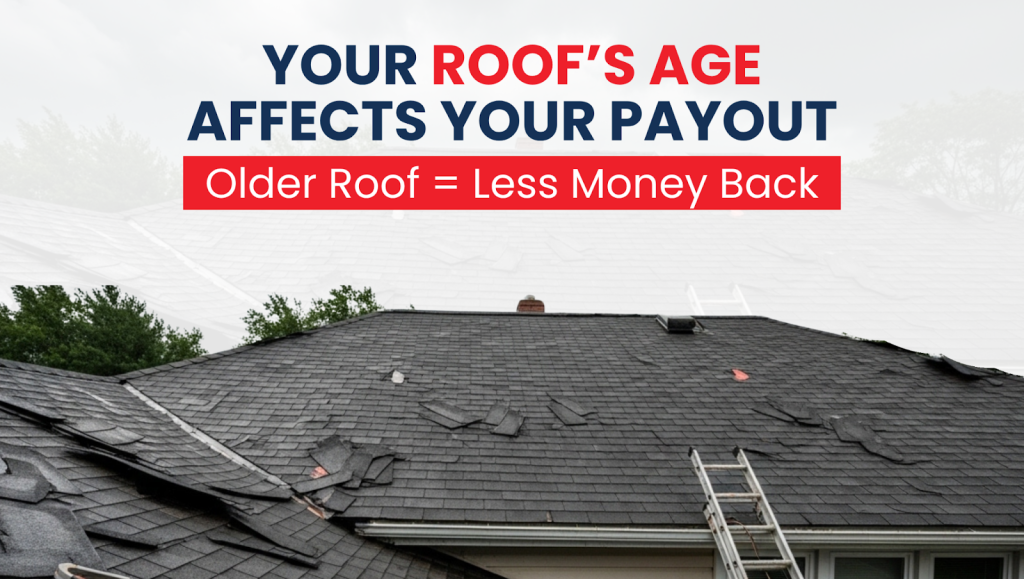
Yes, and this is one of the most important things NJ homeowners need to understand before filing a claim.
Many insurance companies in New Jersey have moved to age-based policies, especially for roofs over 10–15 years old. Here’s how this typically plays out:
Roofs under 10 years old:
Most insurers will cover these at full Replacement Cost Value (RCV) , meaning they pay to replace your damaged roof with a new one of similar quality, minus your deductible.
Roofs 10–20 years old:
Many insurers will only pay Actual Cash Value (ACV) , which factors in depreciation. If your 15-year-old roof would cost $18,000 to replace but has depreciated by 50%, your insurer might only cut you a check for $9,000 (minus your deductible). You’re responsible for the rest.
Roofs over 20 years old:
Some insurers in NJ will refuse to renew your policy or will only offer ACV coverage. A handful of companies won’t cover old roofs at all and may require a roof inspection before renewal.
💡 Pro Tip: Check your policy declarations page right now. Look for the words ‘ACV’ or ‘Actual Cash Value’ next to roof coverage. If you see it, you may be significantly underinsured and not know it.
Actual Cash Value vs. Replacement Cost Value: What’s the Difference?
This distinction can mean thousands of dollars in your pocket, or out of it.
Example: Your roof costs $20,000 to replace. It’s 12 years old with an expected lifespan of 25 years. That’s roughly 48% depreciation. • RCV payout: ~$20,000 (minus deductible) • ACV payout: ~$10,400 (minus deductible) • The difference: $9,600 that comes out of your pocket.
If your policy is ACV-only and your roof is aging, talk to your insurance agent about upgrading to RCV coverage. The premium increase is usually modest compared to the protection it provides.
How to File a Roof Leak Insurance Claim in NJ ,Step by Step
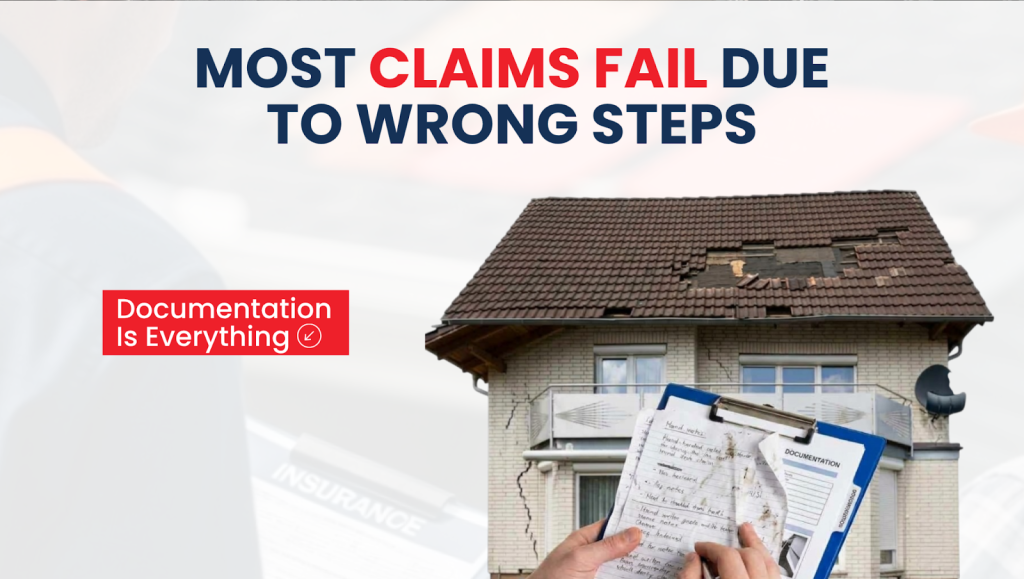
Filing a claim the right way dramatically increases your odds of a fair payout. Here’s the process that NJ homeowners should follow:
Step 1: Stop the Bleeding
Your first obligation is to prevent further damage. Place buckets, move belongings, and if safe, use a tarp over the damaged area. Keep all receipts for any emergency materials you purchase; your insurer may reimburse these.
Related: If your roof is actively leaking right now, visit our Emergency Roof Leak Repair NJ page. Getting a tarp or temporary fix in place protects your home and your claim.
Step 2: Document Everything, Thoroughly
• Photograph the damaged roof from ground level and as many angles as safely possible
• Photo and video every interior water stain, drip, and damaged material
• Screenshot weather data showing the storm date and intensity (Weather.gov is a reliable free source)
• Note the date and time you first noticed the leak
• Save any emergency repair receipts
Step 3: Get a Professional Roofer’s Inspection, Before the Adjuster Arrives
This is the step most homeowners skip, and it’s often the most important one. A licensed NJ roofer can:
• Identify all damage, including subtle damage that adjusters might miss or overlook
• Provide a written scope of work and cost estimate
• Distinguish storm damage from wear and tear in their report
• Be present during the adjuster’s inspection to advocate for your claim
Pro Tip: An experienced local roofer knows what insurance adjusters look for and how to document damage in a way that supports your claim. This is not gaming the system; it’s making sure legitimate damage gets fairly assessed.
Step 4: Call Your Insurance Company and File the Claim
• Contact your insurer’s claims line, not your agent (agents don’t handle claims).
• Provide only factual information: what happened, when, and what you observed.
• Get your claim number and the adjuster’s contact information.
• Ask what documentation they require and their expected timeline.
Step 5: Meet the Adjuster, With Your Roofer Present if Possible
The adjuster works for the insurance company. That doesn’t mean they’re adversarial, but their job is to validate claims, not to find damage on your behalf. Having your roofer present ensures nothing gets missed and you have someone who can speak the same technical language.
Step 6: Review the Adjuster’s Report Carefully
Once the adjuster submits their report, compare it to your roofer’s estimate. If there are significant discrepancies, items excluded, square footage undercounted, or depreciation that seems excessive, you have the right to dispute it.
What If Your Claim Is Denied?
A denial isn’t the end of the road. NJ homeowners have several options:
1. Request a Denial Letter in Writing
You’re entitled to a written explanation of why your claim was denied. This is the starting point for any appeal or dispute.
2. File an Internal Appeal
Every insurer has an internal appeals process. Submit additional documentation ,your roofer’s report, weather data, photos ,and formally request a review.
3. Hire a Public Adjuster
Public adjusters work for you ,not the insurance company. They review your claim, identify missed or underpaid damage, and negotiate on your behalf. They typically charge a percentage of the final settlement (usually 10–15%), but they often recover significantly more than the original offer.
4. File a Complaint with the NJ Department of Banking and Insurance
If you believe your claim was wrongfully denied or your insurer acted in bad faith, you can file a complaint with the NJDOBI (dobi.nj.gov). This adds regulatory pressure and often prompts insurers to reconsider.
5. Consult a Property Insurance Attorney
For large claims, especially those involving significant interior water damage,a property insurance attorney may be warranted. Many work on contingency, meaning they only get paid if you win.
Ice Dams and Insurance Coverage in NJ, A Special Case
Ice dams deserve their own section because they’re extremely common in NJ winters and coverage is frequently disputed.
Most standard HO-3 policies cover damage caused by the weight of ice and snow, or by ice dam leaks , because the water damage itself is sudden and accidental. However, insurers may argue that ice dams result from inadequate attic insulation or ventilation, which is a maintenance issue.
To protect your ice dam claim:
• Document the ice dam with photos before it melts
• Get a roofer’s assessment that clearly attributes interior damage to the ice dam.
• Have a record of your attic’s insulation condition; this refutes claims of negligence.
• File quickly; the faster you act, the harder it is to argue you ignored the problem.
We explain ice dam formation, damage, and safe removal on our Ice Dam Repair NJ page. If you’ve had ice dam damage this winter, read that page before calling your insurer.
Should You Call a Roofer or Your Insurance Company First?
Call a roofer first, always.
Here’s why: your insurance adjuster will form an initial impression of the damage based on their first visit. If that visit happens before a professional roofer has assessed the roof, you may not get full credit for everything that’s damaged.
A licensed NJ roofer can identify all damage, including damage that’s not immediately visible from a surface inspection,and document it in a way that clearly supports a storm or event-related cause. That documentation is your best asset going into a claim.
Getting a roofer out first also helps you avoid under-reporting. Many homeowners don’t know what storm damage looks like until a professional shows them. The adjuster may not volunteer that information.
The Bottom Line
Homeowners insurance can cover roof leak repair in NJ , but coverage is far from automatic. The cause of the leak matters enormously, and so does how quickly you act, how thoroughly you document the damage, and whether you have a knowledgeable roofer in your corner when the adjuster shows up.
If you’re dealing with a roof leak right now, don’t wait to see if it gets better on its own. Get a professional inspection, document everything, and understand your policy before you file. That sequence, roofer first, insurer second, documentation throughout, gives you the best chance at a fair outcome.
Questions about your specific situation? Our team has worked alongside hundreds of NJ homeowners navigating the insurance process after roof damage. We’re happy to provide a written inspection report to support your claim.
Content provided by NJ Roof Leak Experts | njroofleakexperts.com
