 Skip to content
To choose a roof leak repair contractor in NJ, verify they’re licensed with the New Jersey Division of Consumer Affairs, carry both liability insurance and workers’ compensation, have documented local experience with your roof type, and provide a written estimate with a clear warranty, before you sign anything.
Hiring the wrong roofer in New Jersey is one of the most expensive mistakes a homeowner can make. Storm chasers, unlicensed contractors, and lowball bidders leave behind botched repairs, voided manufacturer warranties, and, in some cases, brand-new leaks created by the “fix” itself. This guide gives you a clear, practical framework for finding and vetting a contractor you can actually trust.
Why Choosing the Right NJ Roofer Matters More Than You Think?
Roofing is one of the most complaint-heavy trades in New Jersey. The NJ Division of Consumer Affairs consistently lists home improvement contractors, including roofers, among the top categories for consumer complaints each year.
The reasons are predictable: roofing work happens out of sight, most homeowners have no way to evaluate quality from the ground, and the consequences of bad work often don’t show up until months later, after the contractor has moved on.
A bad roof repair doesn’t just fail to fix the leak. It can void your shingle manufacturer’s warranty, create new entry points for water, and give your insurance company grounds to deny future claims due to improper workmanship. The stakes are real. That’s why many homeowners also choose to work with experienced Roof Inspection Specialists in St. Louis Mo before approving major repairs or insurance-related roofing work, especially when long-term structural protection is a priority.
Step 1: Verify NJ Licensing Before Anything Else
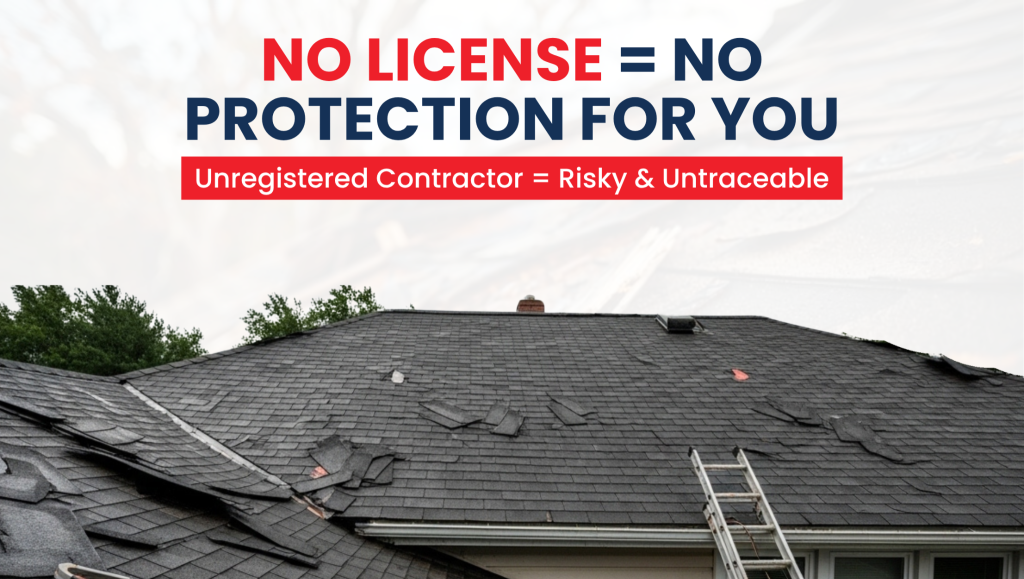
New Jersey requires all home improvement contractors, including roofers, to be registered with the NJ Division of Consumer Affairs under the Home Improvement Contractor (HIC) registration system. This is not optional, and hiring an unregistered contractor removes most of your legal protections if something goes wrong.
How to verify:
Go to the NJ Division of Consumer Affairs website and use their contractor lookup tool. You’ll need the contractor’s business name or registration number. A legitimate contractor will give you this number without hesitation; in fact, it should appear on their estimate and any contract they provide.
Beyond the HIC registration, check whether the contractor holds any manufacturer certifications. GAF Master Elite, CertainTeed SELECT ShingleMaster, and Owens Corning Preferred contractors have met specific installation training requirements. These certifications also allow them to offer extended warranty coverage that unaffiliated contractors cannot. This is also important when comparing companies that specialize in Roof Repairs Central Coast.
What to ask:
- “What is your NJ Home Improvement Contractor registration number?”
- “Are you certified by any shingle manufacturers?”
- “Can you provide proof of that certification?”
Any hesitation on these questions is a red flag.
Related: Roof Leak Repair vs. Full Roof Replacement: Which Do You Need?
Step 2: Confirm Insurance, Both Types
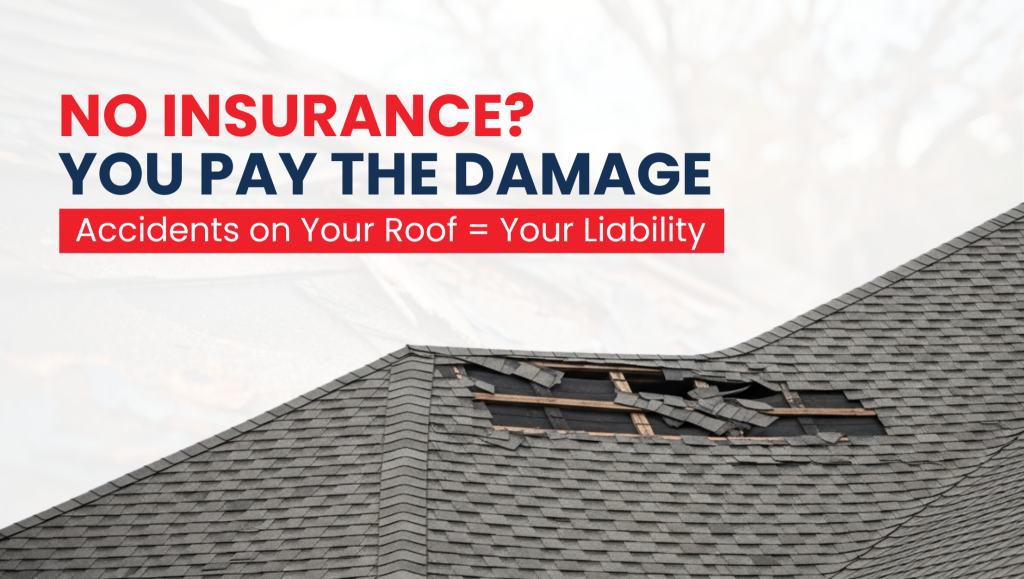
This step protects you from financial liability if something goes wrong during the repair. You need to verify two separate policies, not just one.
General Liability Insurance covers damage to your property caused by the contractor. If a roofer drops equipment through your skylight or causes water damage during a repair, their liability policy covers it. Without this, you’re filing a claim on your own homeowners’ insurance for damage someone else caused.
Workers’ Compensation Insurance covers the contractor’s employees if they’re injured on your property. Without it, an injured worker can potentially pursue a claim against you as the property owner, even though you hired them to do a job.
How to verify: Ask for a certificate of insurance before work begins. The certificate should name your address and list both policy types with current dates. Call the insurance company directly to confirm the policy is active; certificates can be forged or issued on lapsed policies.
Any contractor who declines to provide a certificate of insurance should not be on your roof. Just as homeowners carefully verify insurance before hiring roofing contractors, it’s equally important to work with trusted professionals for services like Appliance Repair in Livonia, MI to ensure your home and appliances are protected from unnecessary damage and costly repairs.
Step 3: Focus on Local NJ Experience
New Jersey’s climate creates specific roofing challenges, such as nor’easters, heavy snow loads, ice dams, freeze-thaw cycles, and high-humidity summers. A contractor who does most of their work in a different state or a different climate region may not have the right experience for what your roof actually deals with.
Local experience also matters for practical reasons: a contractor who regularly works in Bergen County knows the permitting process in Hackensack. One who works throughout Essex County has handled the older housing stock common in the area. Local reputation is also easier to verify; neighbors, local Facebook groups, and area-specific review platforms give you a real-world picture that a generic five-star Google rating can’t.
What to look for:
- How long have they been operating in NJ specifically, not just “in business.”
- Do they have references from homeowners in your county or town?
- Are they familiar with the specific permit requirements in your municipality?
- Do they know local building codes for roofing repairs and replacements?
Questions to ask:
- “How many roofs have you repaired in this area in the past two years?”
- “Can you give me references from jobs in my town or county?”
- “Are you familiar with the permit requirements in my municipality for this type of repair?”
Step 4: Get Multiple Written Estimates, And Know What to Look For
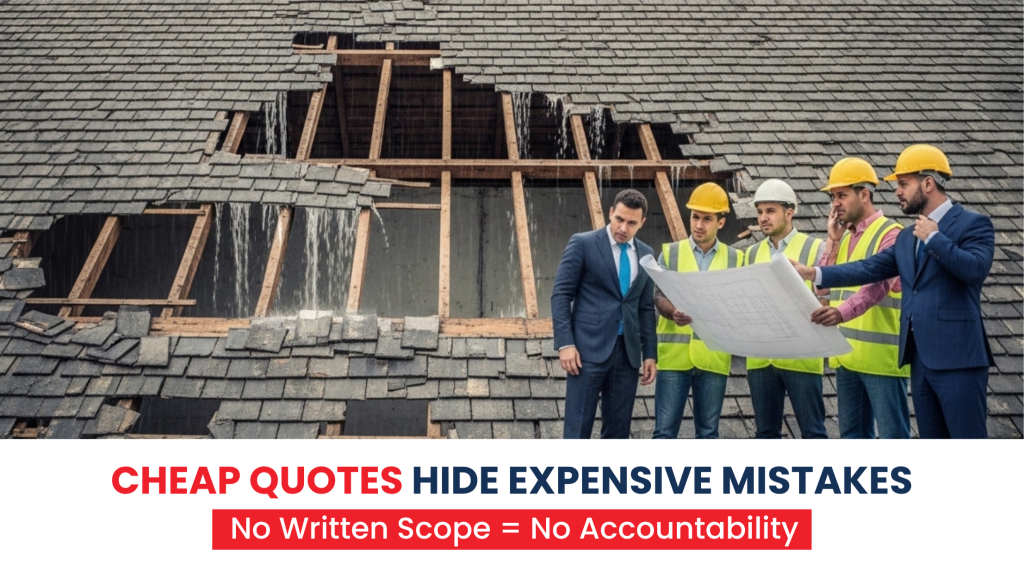
Get at least three written estimates for any roof repair. Not verbal quotes, written, itemized estimates that specify materials, scope of work, and timeline.
A written estimate protects you and tells you a lot about how professional the contractor is. A contractor who hands you a number on a sticky note or gives you a price over the phone without seeing the roof is not a contractor you want on your home.
What a good estimate includes:
- Specific materials to be used, including the manufacturer’s name and product line.
- Exact scope of work, what’s being repaired, replaced, or sealed.
- Number of layers being removed (if applicable).
- Disposal of old materials.
- Timeline for start and completion.
- Payment schedule.
- Warranty terms, both on labor and materials.
Red flags in an estimate:
- Suspiciously low price compared to other bids, this usually means cut corners, inferior materials, or a contractor planning to do minimal work and move on.
- No material specifications, “standard shingles” tells you nothing.
- Request for full payment upfront, legitimate contractors typically ask for a deposit (usually 10–30%) with the balance due on completion.
- Pressure to sign immediately or lose the price, this is a classic high-pressure sales tactic.
If one estimate is dramatically lower than the others, ask the contractor specifically what they’re doing differently. The answer will tell you whether they found an efficiency or they’re cutting corners.
Step 5: Understand the Warranty. There Are Two Kinds
A roof repair comes with two distinct warranties, and most homeowners don’t realize they’re separate things.
The manufacturer’s material warranty covers defects in the roofing materials themselves, shingles, underlayment, and flashing. These warranties range from 20 years to lifetime, depending on the product, but they almost always require installation by a certified contractor following the manufacturer’s specifications. If an uncertified roofer installs your shingles incorrectly, the manufacturer can void the warranty, and often does.
Contractor’s workmanship warranty covers the quality of the installation itself. If the repair fails because of how it was done, not because of a material defect, the workmanship warranty covers it. These vary widely: some contractors offer one year, others offer five or ten. Get the terms in writing.
What to ask:
- “What manufacturer’s warranty comes with these materials?”
- “Do I need a certified installer to maintain that warranty?”
- “What is your workmanship warranty, and what does it cover?”
- “Is the warranty transferable if I sell the house?”
A transferable workmanship warranty adds real value to your home; it’s a selling point. Make sure you understand whether yours qualifies.
Step 6: Check Reviews, But Check Them the Right Way
Online reviews matter, but they need to be read critically. A contractor with 200 five-star reviews accumulated over ten years tells a different story than one with 200 reviews posted in the last six months.
Where to check:
- NJ Division of Consumer Affairs, check for formal complaints or disciplinary actions.
- Angi and HomeAdvisor are useful, but be aware that contractors pay for placement on these platforms.
- Nextdoor and local Facebook community groups often provide the most candid, unfiltered feedback.
What to look for in reviews:
- Specific mentions of the type of repair you need (leak repair, flashing, chimney, etc.).
- Comments about how the contractor handled problems or callbacks.
- Mentions of the crew’s behavior on the property, cleanliness, communication, and punctuality.
- Any pattern in negative reviews, even if the overall rating is high.
One negative review about a billing dispute is different from five negative reviews all saying “they never came back to fix the problem.” Patterns matter more than individual data points.
Step 7: Watch for Storm Chasers, A Specific NJ Problem
After every major storm in New Jersey, a nor’easter, a hail event, a derecho, out-of-state contractors flood into the area, targeting homeowners with fresh damage. These “storm chasers” operate a predictable pattern:
They knock on doors, often within days of a storm. They offer free inspections. They push you to file an insurance claim immediately and offer to “work directly with your insurance company.” They ask you to sign an Assignment of Benefits (AOB) agreement, which legally transfers your insurance claim rights to them. Then they disappear, do substandard work, or both.
Red flags that indicate a storm chaser:
- Out-of-state license plates on their vehicles
- No local office or physical address
- Pressure to sign an AOB or any document before the estimate
- “We’ll match whatever insurance pays.” A contractor who doesn’t name a price based on scope is not pricing the job properly
- No NJ HIC registration number
- Offering to waive your deductible, this is insurance fraud in New Jersey
If someone knocked on your door after the last storm, that alone isn’t disqualifying, but verify every credential listed in this guide before moving forward.
Step 8: Ask the Right Questions Before You Hire
Use this list when you’re down to your final candidates:
- Are you registered as a Home Improvement Contractor with the NJ Division of Consumer Affairs? What’s your registration number?
- Can you provide a current certificate of insurance for both liability and workers’ comp?
- How long have you been doing roof repairs, specifically in this area of NJ?
- Will you pull any required permits for this repair?
- Who actually does the work, your own employees or subcontractors?
- How do you handle callbacks if the repair doesn’t hold?
- What is your workmanship warranty in writing?
- Can I have three references from similar jobs in this county?
The last question, about subcontractors, deserves extra attention. Many roofing companies sell the job and then hand it to a subcontracted crew they’ve never used before.
Ask whether the crew that does your job is employed directly by the company or is a third-party sub. If it’s a sub, ask whether they’re covered under the same insurance policy.
Red Flags Summary: Walk Away If You See These
| Unregistered contractor,no legal recourse if work fails | What It Means |
| No NJ HIC registration number | Unregistered contractor ,no legal recourse if work fails |
| Declines to provide insurance certificate | Insurance fraud, illegal in NJ |
| Full payment demanded upfront | High risk of no-show or abandoned job |
| Pressure to sign immediately | Classic high-pressure sales tactic |
| No written estimate or vague scope | No basis to hold them accountable |
| Asks you to sign AOB before estimating | Storm chaser pattern ,walk away |
| No local references available | Can’t verify track record in NJ |
| Dramatically underbids others | Cut corners, inferior materials, or both |
| Offers to waive your deductible | Insurance fraud ,illegal in NJ |
What a Legitimate NJ Roofing Contractor Looks Like?
To contrast the red flags, here’s what a trustworthy contractor actually does:
- Provides their NJ HIC number on the first conversation, unprompted.
- Send a certificate of insurance before you ask for it.
- Do a thorough physical inspection before writing any estimate.
- Gives you a detailed written estimate with specific materials listed.
- Explains the warranty clearly and puts it in writing.
- Gives you time to compare estimates without pressure.
- Pulls required permits and schedules inspections.
- Leaves your property clean, hauls away all debris, and does a magnet sweep for nails.
- Follow up after the first rain to confirm the repair held.
How Does This Connect to Your Roof Leak Repair?
Once you’ve chosen a contractor, make sure they understand the specific cause of your leak before work begins. A roofer who patches the most visible damage without diagnosing the actual entry point may fix one symptom while the real problem continues.
If you haven’t identified where your leak is coming from yet, read our guide on how to find the source of a roof leak in your NJ home before the contractor arrives. Going into that conversation with some knowledge of what’s happening puts you in a much stronger position.
And if you’re dealing with a specific type of leak, chimney, flat roof, flashing, or ice dam, make sure the contractor has hands-on experience with that repair type specifically.
Helpful Pages on NJRoofLeakExperts.com
- Roof Leak Repair NJ, Our main service page; what a professional repair process looks like, start to finish.
- Emergency Roof Leak Repair NJ, if you need someone now, not after a vetting process.
- Roof Flashing Repair NJ, One of the most skill-dependent repairs; contractor experience matters especially here.
- Chimney Leak Repair NJ, Multi-point repair that requires specific diagnostic experience.
- Ice Dam Repair NJ, Specialized removal and repair; not every roofer handles this correctly.
- Flat Roof Leak Repair NJ, Different skill set from sloped roofing; verify flat roof experience specifically.
- Metal Roof Leak Repair NJ requires familiarity with metal roofing systems; don’t hire a shingle roofer for this.
- Commercial Roof Leak Repair NJ, Commercial contracts have different licensing and insurance requirements.
- Is Roof Leak Repair Covered by Homeowners Insurance in NJ? Know this before a contractor starts talking about your insurance claim.
- How Much Does Roof Leak Repair Cost in NJ? ,Know fair pricing before you collect estimates.
The Bottom Line
Choosing a roof leak repair contractor in New Jersey comes down to verification, not trust. Verify the license. Verify the insurance. Verify local experience with a phone call to references. Get everything in writing before a single nail goes into your roof.
The contractors who push back on any of these steps are telling you something important. The ones who provide everything without hesitation, registration number, insurance certificate, written estimate, and references are the ones worth hiring.
Take the time to do this right. A roof repair done correctly the first time is a solved problem. One wrong done is the beginning of a much longer and more expensive story.
Content provided by NJ Roof Leak Experts
